Falling ill means more than just resting—there's the practical worry of applying for leave the right way, informing your employer in time, and making sure your absence is approved without friction. Done properly, applying for medical leave is simple. Done carelessly, it can mean a rejected application, a loss of pay, or an awkward conversation with HR.
This guide walks you through how to apply for medical leave in India: how to inform your employer, how to write a clear leave application, how many days you can take, what your rights are, and when you'll need a medical certificate to support your request.
A quick clarification upfront: applying for medical leave is the process of requesting time off from your employer. A medical certificate is one document that may support that request. They're related but separate—this guide covers the application process; where a certificate comes in, we'll point you to the right place.
At a Glance
- The basics: Inform your employer as early as possible, submit a written leave application, and attach a medical certificate if your leave is long enough to require one.
- Notice: Tell your manager or HR as soon as you know you can't work—ideally before your shift or workday starts.
- How many days: Depends on your company's leave policy and the type of leave you have; many policies require a certificate beyond a set number of days (often 2–3).
- Your rights: Paid sick leave entitlements in India vary by state law, employment type, and company policy.
- Certificate: Needed for longer absences; you can get one from a registered doctor, including online.
Step 1: Inform Your Employer Promptly
The single most important thing is to tell your employer as soon as you reasonably can—ideally before your workday or shift begins. A quick message or call to your manager or HR, letting them know you're unwell and won't be able to work, sets the right tone and gives the team time to adjust.
Even if you can't write a formal application immediately, an early heads-up matters. Many disputes over medical leave come down to the employee not having informed anyone in time, rather than the illness itself.
Step 2: Check Your Company's Leave Policy
Before you submit anything, take a moment to check your organisation's leave policy—usually in your employee handbook, HR portal, or offer letter. Look for:
- How many sick or medical leave days you're entitled to, and how many you've used
- Whether leave is paid or unpaid beyond a certain point
- At how many days a medical certificate becomes mandatory (commonly beyond 2–3 days)
- How leave must be applied for (email, HR system, a specific form)
- Who needs to approve it
Knowing these rules before you apply means your request matches what your employer expects—the simplest way to avoid a back-and-forth.
Step 3: Write a Clear Medical Leave Application
Your application doesn't need to be long. A good one states the essentials clearly and politely. Include:
- A clear subject line (e.g. "Application for Medical Leave")
- The reason—that you're unwell and need rest—without over-sharing medical detail
- The dates you expect to be away (from and to)
- A note that a medical certificate is attached or will follow, if applicable
- Your contact availability during leave, if relevant
A simple structure works best: a brief greeting, one or two sentences stating you're unwell and the dates, a line about the certificate if needed, and a courteous close. Keep it professional and concise.
Step 4: Attach a Medical Certificate (If Required)
For short absences of a day or two, many employers accept your application on its own. For longer leave—or whenever your company policy requires it—you'll need to attach a medical certificate from a registered doctor confirming that you were unwell and recommending rest.
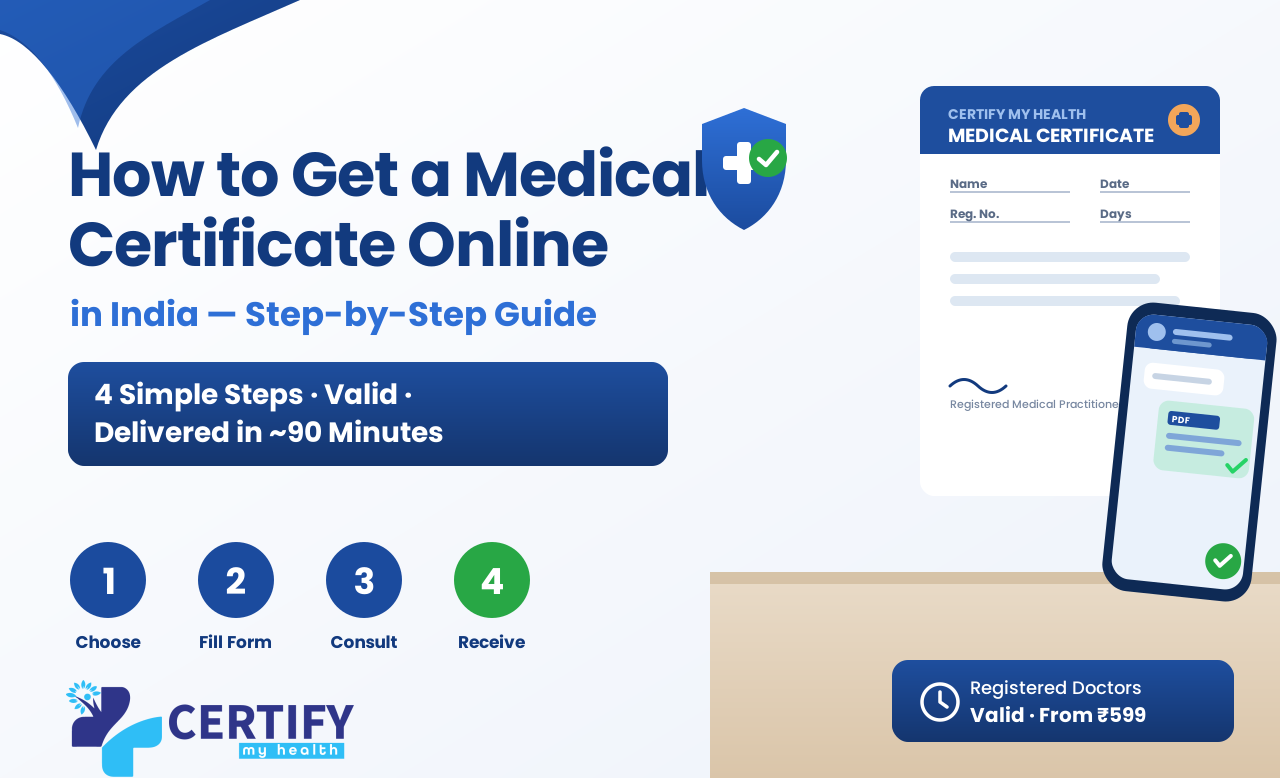
You don't have to visit a clinic to get one. A registered doctor can assess you and issue a valid certificate remotely—see our guide on how to get a medical certificate online, or go straight to a sick leave certificate when you're ready. If you're unsure how many days to request, our leave calculator can give you an estimate before you apply—though the final rest period is always the doctor's decision.
How Many Days of Medical Leave Can You Take?
There's no single national figure—it depends on your employment type, your company's policy, and the applicable state law. A few general points:
- Short illnesses (a cold, a fever) are often a day or two, and many policies let you self-certify these without a doctor's note.
- A medical certificate is usually required beyond 2–3 consecutive days, though the exact threshold is set by your employer.
- Longer medical leave may draw on your sick leave balance, then earned or unpaid leave, depending on your policy.
- Statutory entitlements to paid sick leave exist under various state Shops and Establishments Acts and labour laws, and vary across states and sectors.
Because the rules differ so much, your own company policy and employment contract are the most reliable guide to how many days you can take and how they'll be treated.
Your Rights Around Medical Leave
While specifics vary, a few principles generally hold for employees in India:
- Many employees are entitled to a number of paid sick or casual leave days each year, set by company policy and, in many cases, state law.
- An employer can ask for reasonable proof—typically a medical certificate—for leave beyond a short period.
- Leave should not be unreasonably refused when it's genuine and properly applied for with any required documentation.
These are general principles, not legal advice. For your exact entitlements, check your employment contract, your company's HR policy, and the labour law applicable in your state.
Common Mistakes to Avoid
- Informing no one in time. Even a short message early beats a detailed application sent late.
- Not checking the leave policy, then applying in a way that doesn't match what HR needs.
- Skipping the certificate when your absence crosses the threshold that requires one.
- Mismatched dates between your application, your certificate, and your actual absence.
- Over-sharing medical details. State that you're unwell and the dates; you're not obliged to disclose your full diagnosis.
Frequently Asked Questions
How do I apply for medical leave?
Inform your employer as early as possible, check your company's leave policy, submit a written leave application stating the reason and dates, and attach a medical certificate if your absence requires one.
How much notice do I need to give for medical leave?
As soon as you reasonably can—ideally before your workday or shift starts. Prompt notice is one of the most important parts of a smooth application.
Do I need a medical certificate to apply for medical leave?
Not always for a day or two, but most employers require one for longer absences—commonly beyond 2–3 consecutive days. Check your company's policy.
How many days of medical leave am I entitled to?
It depends on your employment type, company policy, and state law. Your employment contract and HR policy are the most reliable guide to your entitlement.
Where can I get a medical certificate for my leave?
From a registered doctor, including online. A registered doctor can assess you remotely and issue a valid certificate, usually within a short time.
How do I write a medical leave application?
Keep it short and clear: a subject line, a sentence stating you're unwell and the dates, a note about the certificate if applicable, and a polite close. Avoid over-sharing medical detail.
Can my employer reject my medical leave?
Genuine, properly documented medical leave applied for in line with policy should not be unreasonably refused, though approval and pay treatment follow your company's rules and the applicable law.
Is medical leave paid?
It depends on your policy and entitlements—paid up to a point, then potentially drawing on other leave or unpaid, varying by employer and state law.
Final Thoughts
Applying for medical leave the right way comes down to a few simple habits: tell your employer early, know your leave policy, write a clear and concise application, and attach a medical certificate when your absence requires one. Handle those, and your leave is far more likely to be approved without friction.
If your application needs a certificate, you don't have to leave home to get it—CertifyMyHealth connects you with registered doctors for a secure online consultation, with a certificate issued when the doctor is satisfied that rest is warranted.
Need a certificate for your leave? Get a sick leave certificate online through CertifyMyHealth.